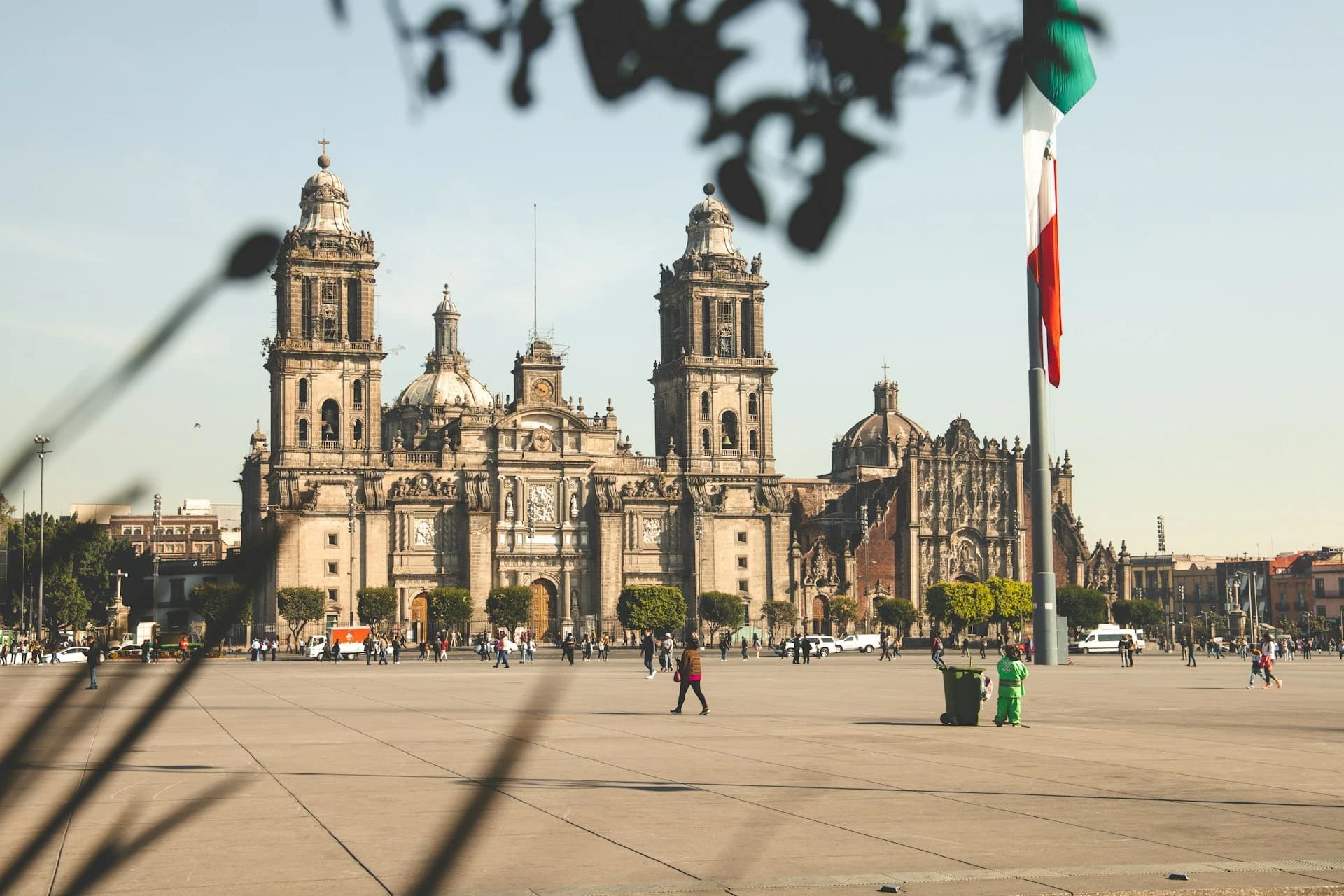
January sits in the driest stretch of the Mexico City year, falls inside the core monarch butterfly season, and is typically cheaper once the Three Kings holiday clears on 6 January. Here is what the month actually involves.
What You Should Know
- January sits in the driest part of the Mexico City year, with climate normals showing roughly one to two rain days, and it often offers some of the clearest conditions of the year. That matters more than the temperature: dry-season air favours Teotihuacán, balloon flights and anything else that depends on a long view, though haze can still occur.
- The month splits in two. Through 6 January the city is still in holiday mode for Día de Reyes, with domestic travel and higher rates. From 7 January onward demand falls and rates generally follow, which tends to make the later weeks better value, though the size of the difference varies by property and dates.
- January falls inside the core monarch butterfly season. Conservation and travel sources generally place the densest colony period from January to mid-February, and the sanctuaries west of the city are a full day trip of roughly 12 hours, not a half-day add-on.
- The cold catches people out. Nights fall to around 6°C and the city has almost no indoor heating, so early departures and colonial-era buildings feel considerably colder than a 21°C daytime average suggests.
Is January a Good Time to Visit Mexico City?
| Is January a good time to visit? | |
|---|---|
| Best for | Walking, cultural sightseeing, day trips and dry-season travel |
| Expect | Mild afternoons and cold mornings, with a large daily temperature swing |
| Timing | Compare live rates for dates after the Día de Reyes holiday period |
| Watch out for | Morning cold, possible haze, and the physical demands of the mountain butterfly sanctuaries |
⭐ Our suggested January window: 13 to 27 January. This falls after the Día de Reyes holiday period and within the core monarch overwintering season. If your priority is a lower hotel rate, compare live prices for the second and third weeks before booking, since the saving varies by property and dates.
| Factor | January Rating |
|---|---|
| Weather | 9/10, driest month, clear and mild by day |
| Crowds | 8/10, busy to 6 January, then quiet |
| Prices | 8/10, sharp drop after the holiday week |
| Air Quality | 5/10, winter inversions trap haze in the mornings |
| Monarch Butterflies | 10/10, inside the core season |
| Pyramids & Day Trips | 9/10, dry roads and generally good long views |
| Walking the City | 9/10, comfortable for anyone who does not mind cool mornings |
| Families | 8/10, easy weather, but cold early starts |
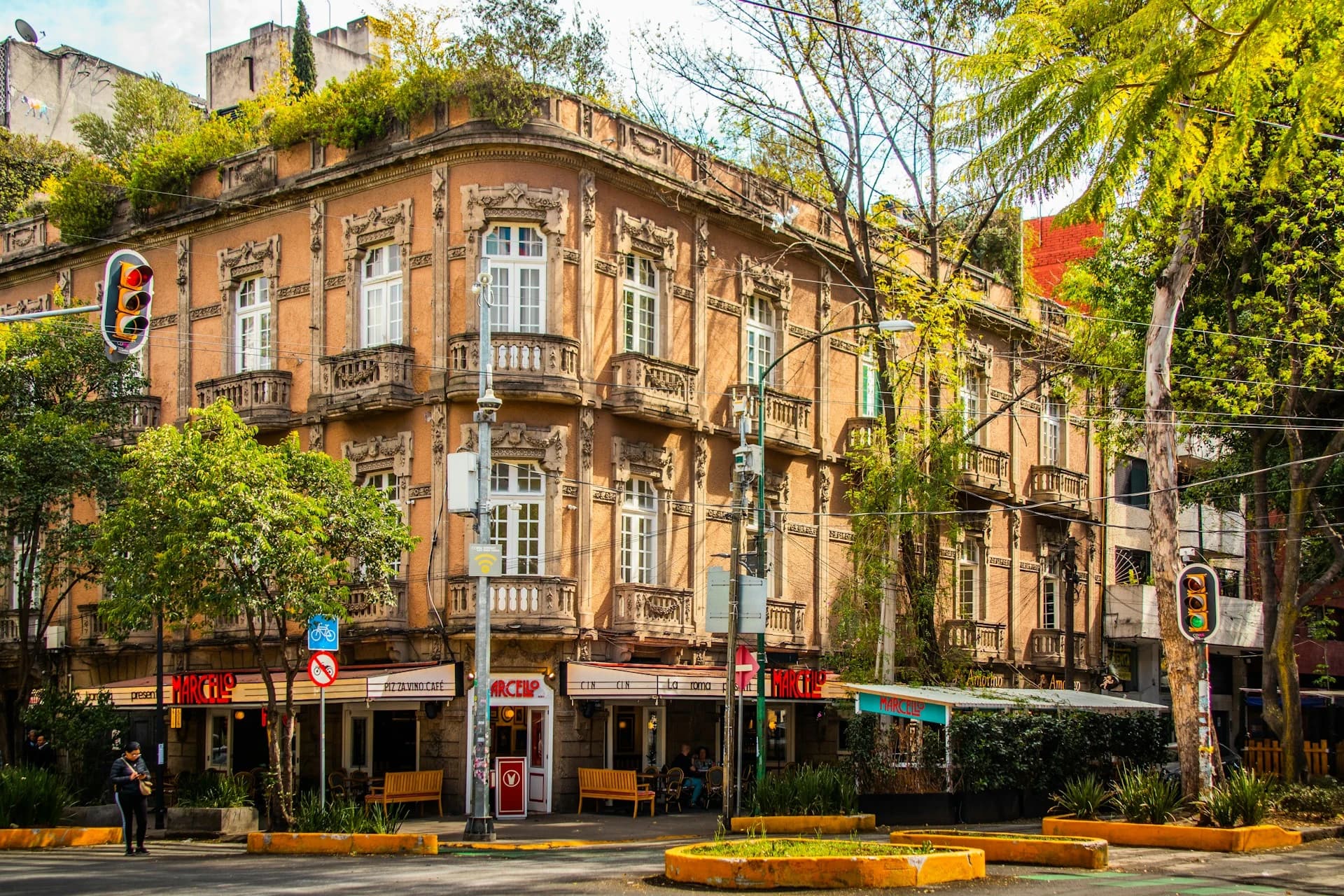
| Couples | 8/10, quiet streets and low rates after the 7th |
💰 Illustrative January hotel rates (Roma Norte and Condesa, mid-range):
1 to 6 January: ~$95–140/night · 7 to 31 January: ~$45–75/night
Illustrative only, not a market average. These are indicative nightly room rates for two people before taxes and fees, drawn from published rate summaries reviewed on 24 September 2026, not from a systematic sample of properties. Live rates vary widely by property, dates and booking lead time. Check current prices before booking.
Our planning recommendation, for anyone asking about one week in Mexico City with nothing else specified, would be January. The weather does the least to interfere: days sit around 21°C, rain is close to nonexistent, and the haze that builds through the spring has not arrived yet. For a city you experience mostly on foot and mostly outdoors, that combination is hard to beat.
The honest tradeoff is temperature swing. A 21°C afternoon and a 6°C dawn is a 15-degree gap, and Mexico City buildings are not built to hold heat. Most people pack for the average and end up cold at both ends of the day. We would book January for anyone prioritising sightseeing, walking and day trips, and steer sun-seekers toward the coast instead, because this is a dry, bright, cool month rather than a warm one.
Mexico City Weather in January
| Metric | January |
|---|---|
| Avg High | 21°C (70°F) |
| Avg Low | 6°C (43°F) |
| Rain Days | ~1–2 |
| Rainfall | ~10 mm (0.4 in) |
| Humidity | Moderate, around 54% |
| Wind | Low |
| Air Quality | Moderate, morning inversions common |
Temperature and Humidity
Daytime highs hold steady near 21°C for the whole month, which at 2,240 metres feels warm in direct sun and cool the moment you step into shade. Nights drop to around 6°C. Published normals vary a little by source, roughly 19 to 22°C for the high and 4 to 7°C for the low, but every source agrees on the shape: mild days, genuinely cold mornings.
Humidity sits around 54%, moderate by the city's standards and well below the July peak.
Rain Pattern
January sits in the middle of a dry season that runs from October to May, and it is the driest point of it. Expect roughly one to two rain days and about 10 mm of total rainfall for the month. In practice this means you can plan outdoor days without a weather contingency, which is not true from June to September.
Sky and Outdoor Conditions
Cloud cover thins as the month progresses, from around 43% at the start to 37% by the end, and the sky is clear or only partly cloudy about half of daylight hours. What typically happens is that mornings start hazy and sharpen through the day, so long views from Teotihuacán or a balloon basket are better later in the morning than at first light.
Mexico City Crowds and Prices in January
Mexico City in January is really two different months, and the dividing line is 6 January.
1 to 6 January: the holiday tail
Día de Reyes on 6 January closes out the Mexican holiday season, and the city stays busy for it. This is domestic travel rather than international: families are together, rosca de reyes is everywhere, and the Alameda Central and Centro are lively. Hotel rates are generally still elevated, sitting closer to the December holiday level than to the rest of January. Museums and restaurants run holiday hours, and some close outright around the 1st.
7 to 20 January: the drop
The week after Reyes usually brings a noticeable drop. Domestic travel ends, international visitors have not arrived in volume, and illustrative searches for mid-range Roma Norte and Condesa rooms returned figures in the region of $45 to $75 a night. Sites that queue in high season are often walk-up. Most people do not realise that a cheaper stretch of the dry season sits inside its better weather, which is the strongest practical argument for the later weeks.
21 to 31 January: still quiet
Conditions hold and crowds stay low through the end of the month. Rates typically firm slightly toward February while staying below the December holiday level. If your dates are flexible within the month, we would lean toward the middle two weeks: climate normals are flat across January, so you are choosing on price and crowds rather than weather.
Monarch Butterflies in January: Season and Logistics
January is one of the strongest months for viewing the overwintering colonies, and it is the clearest seasonal reason to choose these dates over November or March. The overwintering season runs from roughly November to mid-March, and conservation and travel sources generally describe the densest period as January to mid-February, when the butterflies cluster heavily enough on the oyamel firs to weigh down branches.
The sanctuaries are not in Mexico City. They sit in the mountains of Michoacán and the State of Mexico, west of the capital: El Rosario and Sierra Chincua near Angangueo, and Piedra Herrada near Valle de Bravo. This matters for planning, because a sanctuary visit is a full day out rather than an afternoon. The tours we compared run around 12 hours door to door.
Two practical points decide how good the visit is. Butterflies are most active between roughly 10am and 3pm on a sunny day, when warmth gets them flying rather than clustered, so an early departure from the city is the point rather than an inconvenience. And the sanctuaries sit above 3,000 metres, higher than the city itself, with an uphill walk to the colonies. We would treat this as the most physically demanding day trip on offer from Mexico City, not a gentle nature outing.
If the butterflies are the reason you are coming, book January dates rather than late February, and give yourself a spare day in case of cloud. Overcast conditions keep the colonies clustered and still, which is far less spectacular than a sunny day.
Mexico City in January: Cold Mornings and Air Quality
January is outside the main hurricane seasons and is typically much drier than summer. Rain is still possible, as the one to two average rain days suggest, and the more practical concerns are the two things nobody packs for.
Cold, and nowhere warm to go
A 6°C morning is not cold by northern-hemisphere winter standards, but Mexico City has almost no domestic heating. Colonial buildings, older apartments and many hotels hold the night temperature well into the morning, and restaurant terraces are cold after sunset. The biggest difference between a comfortable January trip and an uncomfortable one is layers, not a coat: mornings and evenings genuinely need one, and by midday you will be carrying it.
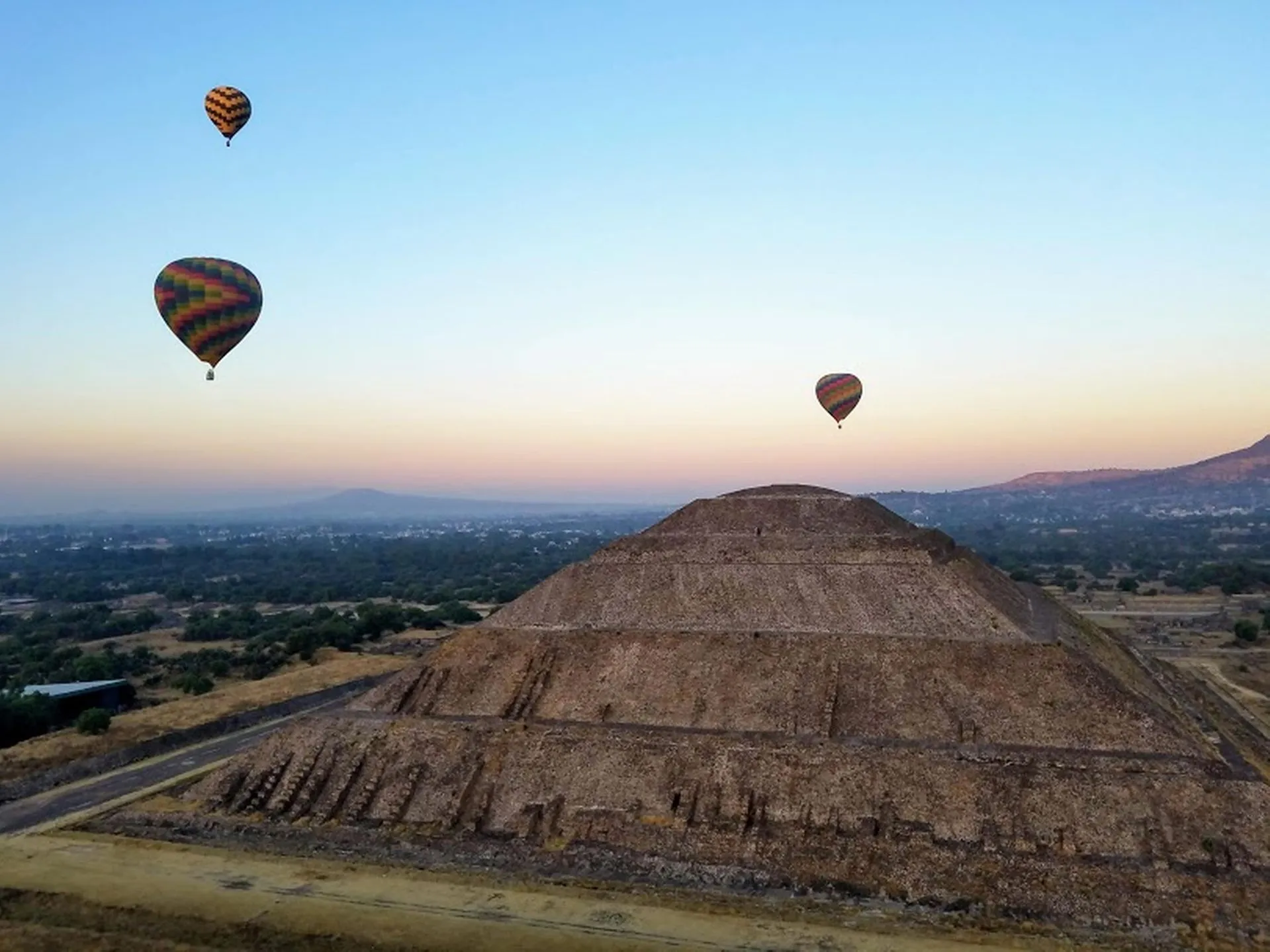
This bites hardest on early departures. Balloon flights over Teotihuacán launch around sunrise, monarch tours leave the city before dawn, and both are noticeably colder than the daytime average implies.
Winter air quality
Cool, still winter mornings produce thermal inversions, where a layer of warmer air traps cooler air and pollution near the ground. The result is the morning haze that is characteristic of Mexico City winters, usually clearing as the day warms. Winter is not generally regarded as the city's worst air of the year, with the spring ozone season usually cited for that, but the morning haze is the factor that most often disappoints people expecting the crisp clarity the dry season implies.
Two practical consequences. Long-distance views are better in the late morning and afternoon than at dawn, which is worth knowing before booking a sunrise activity for the views alone. And anyone with asthma or a respiratory condition should treat winter mornings as the time to take it easy, not the time for a hard uphill walk at altitude.
Best Things to Do in Mexico City in January
| Activity | January Rating | Best Time of Day | Notes |
|---|---|---|---|
| Monarch butterfly sanctuaries | 10/10 | Depart pre-dawn, arrive 10am–3pm | Peak colony density; roughly 12 hours door to door |
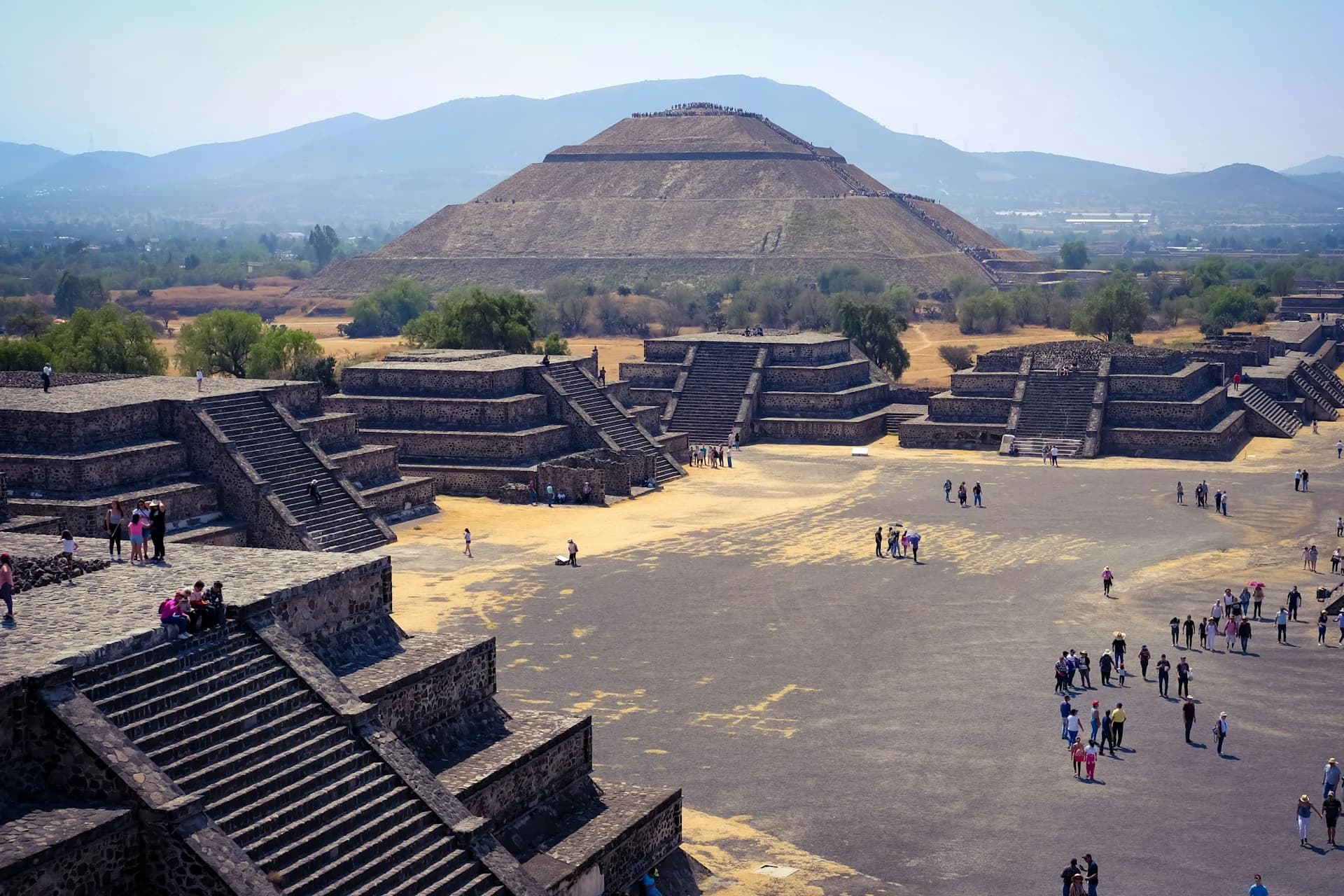
| Teotihuacán pyramids | 9/10 | Late morning | Dry ground, long views; cold at opening |
| Hot air balloon over Teotihuacán | 9/10 | Sunrise | Calm, dry air; genuinely cold in the basket |
| Walking tours of the Centro | 9/10 | Mid-morning onward | The most comfortable walking month of the year |
| Bike tours | 9/10 | Morning | Dry roads; Sunday Reforma closures still run |
| Food and market tours | 9/10 | Midday | Unaffected by season; rosca de reyes through 6 Jan |
| Xochimilco trajineras | 8/10 | Midday | Sunny and dry, but open boats are cold early and late |
| Frida Kahlo Museum and Coyoacán | 8/10 | Any | Indoor, weather-proof; book ahead, closed Mondays |
| Lucha libre | 8/10 | Evening | Indoor arena; the walk there is cold |
| Grutas de Tolantongo | 8/10 | Full day | Hot springs are at their best in cool weather |
| Puebla and Cholula | 9/10 | Full day | Often clear enough to see the volcanoes, which is not true year-round |
| Chapultepec Castle | 9/10 | Late morning | The terrace views are at their best in the dry season |
What January is uniquely good for
Two things favour January in particular, and both come down to air. The month sits inside the core monarch season, and dry-season conditions generally give better long-distance visibility than the summer rains, which changes the value of anything that depends on a view: the pyramids, the balloon flights, the Puebla day trip where the volcanoes are only visible on clear days, and the Chapultepec terraces. Haze can still cut a view short on any given morning.
Everything else is simply comfortable rather than exceptional. Our take: January rewards people who want to move around and look at things, which describes most first-time visitors to this city. If it is your first time, our best things to do in Mexico City guide is the place to start.
More Things to Do in Mexico City in January
- Rosca de reyes through 6 January: bakeries across the city sell the ring-shaped Three Kings bread, and sharing one is the defining social ritual of the first week.
- Basílica de Guadalupe: quieter in January than in the December pilgrimage weeks, and easy to combine with Teotihuacán on the same northbound day.
- Valle de Bravo: the lakeside town near the Piedra Herrada monarch sanctuary, and the softer way to combine butterflies with somewhere to stay overnight.
- Museo Nacional de Antropología: the wet-weather insurance you will not need this month, but still the single best indoor half-day in the city.
- Desierto de los Leones: pine forest above the city, coldest in January, and the clearest month for the walk up.
- Nevado de Toluca: the crater lakes hold ice in January, a genuinely wintry landscape two hours from the capital.
Our Take
Based on the seasonal factors we compared, the trap worth avoiding is booking the holiday week for the weather and paying holiday demand for it. Climate normals for 5 January and 15 January are effectively the same; the rate you pay usually is not, so the practical recommendation is to price both windows before deciding.
Tips for Visiting Mexico City in January
- Compare rates either side of 6 January if you have flexibility: demand falls once Día de Reyes passes and rates generally follow, while climate normals stay flat across the month. The size of the saving varies by property and dates, so check live prices for both windows.
- Pack layers rather than a coat: a 15-degree swing between dawn and mid-afternoon is normal, and you will be carrying whatever you wore at breakfast by lunchtime.
- Expect unheated rooms: domestic heating is rare, so check whether your hotel provides it if you feel the cold; older buildings in the Centro and Roma hold the overnight temperature well into the morning.
- Book the monarch sanctuaries for a sunny forecast: the butterflies fly when it is warm and cluster still when it is not, so an overcast day is a substantially lesser experience. Leave a spare day if you can.
- Treat the sanctuary trip as strenuous: the colonies sit above 3,000 metres, higher than the city, and reaching them is an uphill walk. It is the hardest day trip on offer here.
- Schedule view-dependent activities for late morning: winter inversions leave haze near the ground at dawn that usually clears as the day warms.
- Hotel pools are effectively decorative: most are unheated, and January is not the month for them.
- Check holiday closures in the first week: museums and restaurants run reduced hours around 1 January, and some close entirely.
- Sunday bike closures still run: Reforma and connecting streets close to cars on Sunday mornings year-round, and January is the most comfortable month to use them.
- Visiting at a different time of year? Our Mexico City in February guide covers the month after, which keeps the same dry weather at generally lower rates, and our Mexico City in December guide covers the holiday period this month is the tail of.
How We Put This Guide Together
Weather figures are climate normals rather than a forecast: average high, average low, rain days, rainfall total and humidity for January in Mexico City, compared across several published climate references including Weather Spark, Weather Atlas, Current Results and Climates to Travel, reviewed on 24 September 2026. Those sources disagree slightly, roughly 19 to 22°C for the average high and 4 to 7°C for the average low, and they do not all use the same station or averaging period. We have given a mid-range figure in the table and stated the spread in the text rather than presenting any one source as definitive. Hotel price bands are illustrative, not a market average. They are indicative nightly room rates for two people before taxes and fees, taken from published rate summaries reviewed on 24 September 2026 rather than from a systematic sample of properties or live quotes for specific dates. They are included to show the direction and rough scale of the post-holiday change, not to predict what you will pay, and we would check live rates for your own dates before booking. Activity ratings are our own editorial judgement, scored out of 10 on one question only: how much do January conditions help or hinder this specific activity? They weigh visibility, rain probability, temperature at the hour the activity starts, and whether a seasonal window is open or closed. They are not quality ratings for the operators, and they are not derived from reviews. Tour prices, ratings, review counts, durations and operating days were read from the operator listings on 24 September 2026 and may change. One tour is priced in pesos and was converted at the published rate the booking page uses, so the checkout figure may differ slightly. The activity ratings are our own judgement about how January conditions affect each activity, not operator claims. They weigh the things the month actually changes, which here are visibility, rain, temperature at the start of the day, and whether a seasonal window is open. Monarch butterfly season dates, the daily activity window and sanctuary logistics come from conservation and travel sources independent of any operator, including National Geographic and Monarch Joint Venture, and colony timing varies year to year with weather. The Muévete en Bici Sunday road closures and the air-quality pattern are likewise sourced independently of any operator.
Frequently Asked Questions
Is Mexico City good in January?+
January is one of the best months of the year to visit. It is the driest month, with roughly one to two rain days, daytime highs around 21°C and the clearest long-distance visibility of the calendar. It is also peak monarch butterfly season, and after Día de Reyes on 6 January both crowds and hotel rates fall sharply. The main drawback is the cold: nights drop to around 6°C in a city with very little heating.
What is the weather like in Mexico City in January?+
Mild and dry by day, cold at night. Average highs sit near 21°C (70°F) and average lows near 6°C (43°F), with roughly 10 mm of rain across one to two days and humidity around 54%. Published normals vary a little by source, about 19 to 22°C for the high and 4 to 7°C for the low. Cloud cover thins through the month, and skies are clear or partly cloudy roughly half of daylight hours.
Can you see monarch butterflies from Mexico City in January?+
Yes, and January is the best month for it. The overwintering season runs from November to mid-March, and the colonies are at their densest from January to mid-February. The sanctuaries are in Michoacán and the State of Mexico, west of the capital, so a visit is a full day trip of roughly 12 hours. Butterflies are most active between about 10am and 3pm on a sunny day, so book a clear forecast if you can.
Is air quality bad in Mexico City in January?+
It is moderate rather than bad, and it follows a daily pattern. Cool, still winter mornings produce thermal inversions that trap haze near the ground, which usually clears as the day warms. January is not the city's worst air of the year, since that comes in the spring, but it does mean long-distance views are better in the late morning and afternoon than at dawn. Anyone with a respiratory condition should take winter mornings gently, particularly at altitude.
Is January expensive in Mexico City?+
It depends on which week. Through 6 January the Día de Reyes holiday keeps demand and rates elevated; from 7 January both generally fall. Illustrative searches reviewed in September 2026 put mid-range Roma Norte and Condesa rooms in the region of $95 to $140 a night in the holiday week and $45 to $75 afterwards, before taxes and fees. Treat those as indicative rather than a market average, since the gap depends on property, dates and booking lead time. What does not change across the month is the weather.
What is the best week to visit Mexico City in January?+
We suggest 13 to 27 January, though this is a planning recommendation rather than a fixed optimum. It falls after the Día de Reyes holiday period and within the core monarch overwintering season, and climate normals are effectively flat across the month, so weather is not the variable that separates one week from another. Rates and crowds are, and both depend on property, demand and booking lead time, so compare live prices across the second and third weeks before committing.
What activities are best in Mexico City in January?+
Anything that depends on clear air. The monarch sanctuaries peak this month, and Teotihuacán, sunrise balloon flights, the Puebla day trip where the volcanoes are only visible on clear days, and the Chapultepec Castle terraces all benefit from dry-season conditions, though haze can still occur on any given morning. Walking, bike and food tours are simply at their most comfortable, with dry roads and no afternoon storms.
How cold does Mexico City get in January?+
Nights and early mornings fall to around 6°C, occasionally lower, while afternoons reach about 21°C. The number understates how it feels, because domestic heating is rare and older buildings hold the overnight temperature well into the morning. Early departures are the hardest part: balloon flights launch around sunrise and monarch tours leave before dawn, both noticeably colder than the daytime average suggests. Layers matter more than a heavy coat.
Affiliate note: Some links on this page are affiliate links. If you book through them, we may earn a small commission at no additional cost to you.